


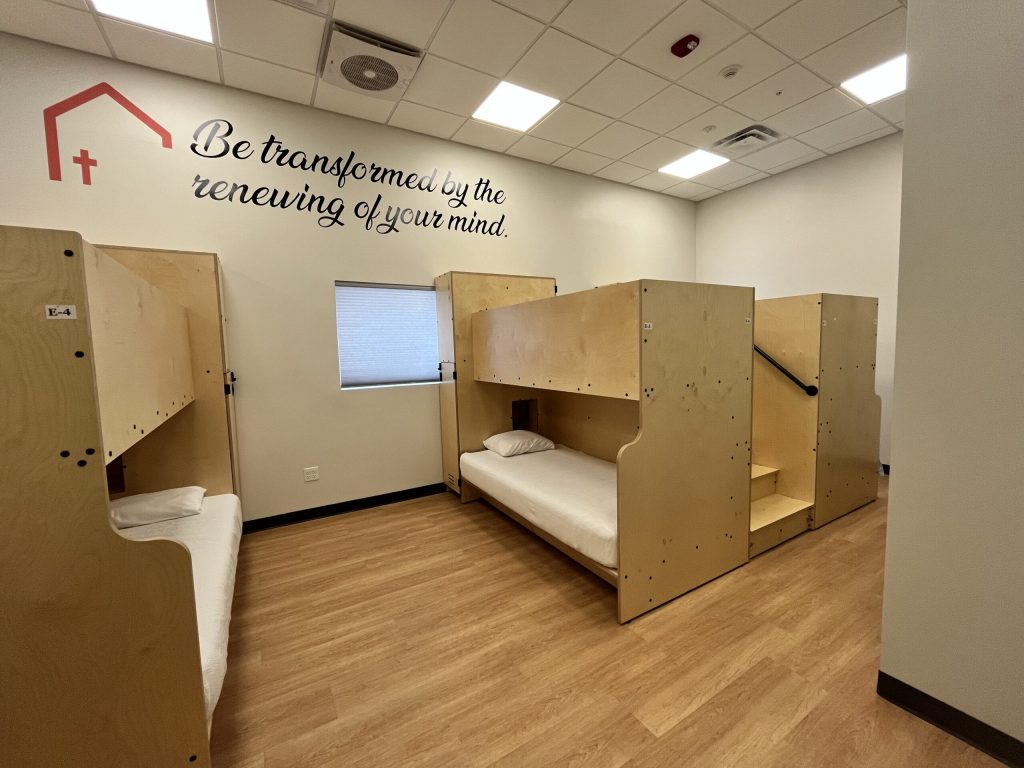


Shelter KC’s Men’s Center in Kansas City, Missouri, combines emergency shelter with a long-term Christian recovery program. Founded in 1950, it serves men experiencing homelessness and addiction, and there’s no cost to stay or take part.
Emergency Shelter and Getting Started
The center’s emergency shelter has more than 60 beds and is open every night of the year, with no appointment needed. A stay includes a bed with fresh linens, hot meals served family style, showers and laundry, clean clothing, chapel service, one-on-one counseling, and referrals for medical care. Intake happens in the afternoon, and guests can’t be intoxicated or under the influence when they arrive. There’s random breath and urine testing, a safety screening for weapons, and a nightly chapel service everyone attends. Guests leave in the morning, with day services available afterward. Also on site are a center offering trauma-informed overnight accommodation for guests dealing with emotional difficulties, and a medical respite center with private and semi-private rooms for men recovering from illness or a procedure. Men interested in long-term recovery begin with shelter intake and are paired with a life coach, who explains the program, helps with the application, and sets up interviews.
The Christian Community of Recovery Program
C-COR, the Christian Community of Recovery, is Shelter KC’s long-term program for men ready to leave addiction behind, and it’s built around practical, spiritual, and relational foundations rather than abstinence alone. It runs through four phases. Preparation takes 13 weeks and lays the groundwork with recovery education, life skills, Bible study, scripture memorization, and building supportive relationships. Discipleship 1 runs 26 to 52 weeks and digs into the reasons behind a man’s addiction while he develops his own recovery plan, grows in faith, works on relationships, prepares for employment, and takes on more responsibility. Discipleship 2 adds another 13 weeks focused on making concrete plans for work, school, and housing. The final transition phase lasts up to a year, when men actually hold jobs or attend school, manage their money, secure housing, and build a life they can sustain. Throughout, men take part in recovery groups, addiction education, pastoral counseling, work therapy, life skills classes, case management, and mentoring. A separate program called Shelter Launch offers personalized coaching for men working toward housing, employment, financial stability, and legal or health issues without entering the full recovery program.

