

Need Help Finding the Right Rehab For You?
✔ Complete Confidentiality
✔ Free Consultation
✔ Available 24/7
A rehab specialist will help you find a treatment.
Covered by Molina? Call now and we'll match you with a program that accepts it.
List of Rehab Centers in Fort Bend County, TX
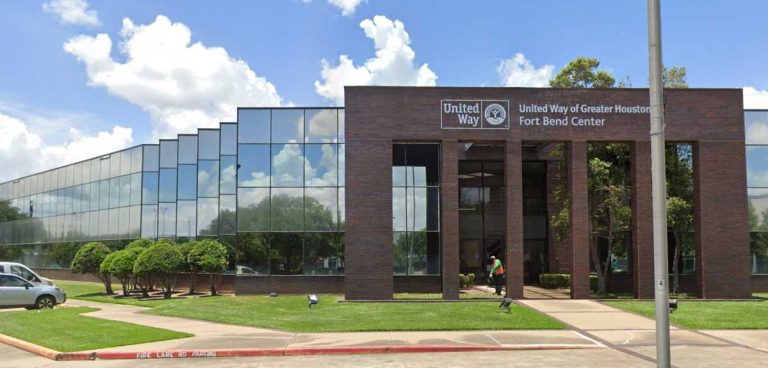
Family Services of Greater Houston provides mental health counseling and support programs in Fort Bend County. After DRS examined the website, we found that the Stafford location offers services for children, teens, and adults. The organization accepts all major insurance plans to ensure accessibility and offers Employee Assistance Programs.
Rehab Settings
- Outpatient
Services Offered
- Drug Prevention and Education
- Holistic
Payment Options
- Free or Low-Budget
- Low-Cost Options
Clientele Served
- Adolescents
- Military
12300 Parc Crest Drive, Stafford, TX
Key details about Family Services of Greater Houston – Stafford
What professional/medical staff work at Family Services of Greater Houston – Stafford?
Judy Vo, M.Ed., LPC | Senior Clinician
Alejandra Valdez, LMSW | Clinician

Turning Point Foundation, Inc., Fort Bend Clinic, offers residential substance use treatment for youth and adults in Fort Bend County, TX. After DRS reviewed the website, we found they provide an adolescent program lasting 13 to 24 weeks and an adult program for three to six months.
Rehab Settings
- Outpatient
- Transitional Housing
Services Offered
- Aftercare
- Assessment
- Holistic
- Motivational Enhancement Therapy (MET)
- Relapse Prevention
- Substance Abuse Counseling
Payment Options
- Low-Cost Options
- Medicaid
- Self Payment
- Sliding Fee Scale
Clientele Served
- Family Programs
117 Lane Drive Suite 46, Rosenberg, TX
Key details about The Turning Point, Inc. – Fort Bend Clinic
What are their business hours?
Monday to Thursday - 9am to 9pm
Friday - 9am to 5pm
What professional/medical staff work at The Turning Point, Inc. – Fort Bend Clinic?
Sarah Scherzer, B.Sc. (Psychology) | Executive Director

The Counseling Services program at Catholic Charities of the Archdiocese of Galveston-Houston provides behavioral health services in Fort Bend County. After DRS reviewed the website, we found that the program offers therapy for individuals, couples, and families on a sliding fee scale, ensuring accessibility.
Rehab Settings
- Outpatient
Services Offered
- Substance Abuse Counseling
Clientele Served
- Family Programs
- Hispanic Community
Languages
- English
- Spanish
12300 Parc Crest Dr, Stafford, TX
Key details about Catholic Charities of the Archdiocese of Houston-Galveston – Fort Bend County
What are their business hours?
Monday to Friday - 8am to 5pm
What professional/medical staff work at Catholic Charities of the Archdiocese of Houston-Galveston – Fort Bend County?
Cynthia Nunes Colbert, MSW | President & CEO

The Fort Bend Regional Council on Substance Abuse offers prevention, education, and treatment services for individuals, families, and communities throughout Fort Bend County. Youth leadership development and preventive education are central to their mission.
Rehab Settings
- Outpatient
Services Offered
- Drug Prevention and Education
10435 Greenbough, Suite 250, Stafford, TX
Key details about Fort Bend Regional Council On Substance Abuse, Inc – Main Stafford Office
What are their business hours?
Monday to Friday - 8:30am to 5pm
Top Rehab Locations


The Fort Bend Regional Council (FBRC) addresses substance abuse in Fort Bend County, Texas, with a comprehensive strategy combining prevention, treatment, and community-based initiatives. Their school-based prevention programs and extensive treatment options include individual, family, and group counseling.
Rehab Settings
- Outpatient
Services Offered
- Drug Prevention and Education
3926 Avenue H (Hwy 90), Suite 11, Rosenberg, TX
Key details about Fort Bend Regional Council On Substance Abuse, Inc – Rosenberg Office
What are their business hours?
Monday to Friday - 8:30am to 5pm
Why Families Trust DRS
Independent Resource
100% independent with no treatment provider affiliations
Hands-On Experience
A combined 20+ years of hands-on experience getting people into and through treatment
500K+ real conversations with recovery experts
Trusted by Millions
More than 15 million people trust DRS as a recovery resource
Expertise Backed by Research
Treatment listings backed by thousands of hours of research and a clear vetting process to ensure they are accurate, comprehensive, and meet our ethical standards
Education for Long-Term Recovery
We use our expertise to educate people with in-depth articles and our SUPE school programs, addressing the drug problem from all angles
Family-Owned Commitment
As a family-owned and operated organization, we bring personal dedication and long-term commitment to helping families recover
Frequently Asked Questions
Cost, stigma, denial, and limited availability are the barriers that come up most. Many people assume treatment is unaffordable, but options like sliding-scale fees, Medicaid, insurance coverage, and payment plans make it more accessible than most expect. For those in areas with fewer facilities or long waitlists, telehealth programs and outpatient care can fill the gap, and getting on a waitlist now while using interim support like community groups keeps you moving forward rather than waiting to start. Stigma and denial are harder to push past, but family involvement and peer encouragement can make a real difference when motivation is low.
Check whether the facility is licensed by the state and accredited by an independent body like CARF or The Joint Commission, as that's your baseline for quality. From there, ask about staff credentials, treatment approaches, medical support, family involvement, and what aftercare planning looks like. A program that can't clearly answer those questions, or that pressures you to enroll before you've had a chance to evaluate, is one worth passing on.
Start with the practical stuff: does the program accept your insurance, what are the out-of-pocket costs, and are payment plans available. Then get into the structure, including how long the program lasts, what therapies are included, whether family can participate, and whether detox and medical support are on-site. Just as important is what happens after: ask whether the center offers aftercare, outpatient follow-up, alumni support, or connections to sober living. Comparing centers on these specifics rather than just their websites is how you find the one that actually fits your situation.
Yes. Short-term programs, usually around 30 days, focus on stabilization and building a foundation, and they work best for milder cases with strong outside support. Longer programs of 60 to 90 days or more allow time for deeper therapeutic work, relapse prevention, and real practice with life skills, which tends to produce more lasting results for people with severe or long-standing addiction.


What types of addiction treatment are available in Fort Bend County, and how do I know which one fits my situation?
What does addiction treatment in Fort Bend County typically cost?
Where can I find naloxone in Fort Bend County?
Should you seek treatment in Fort Bend County, or look further away?
Fort Bend County, in the southwest Houston metro, is one of the more diverse places in the country, and the local care reflects it. There is counseling for adults and teens, some in English and Spanish, and some that combines counseling with transitional housing. That last piece matters, because when housing is shaky, a program that stabilizes where you live while you get counseling can make the difference. For a stable home the local counseling is a solid fit. Medical withdrawal care and longer programs are in the wider Houston metro, not really the county, so for a dangerous alcohol or benzo withdrawal you start at a local hospital, since those are dangerous to stop alone. Use the local counseling and transitional housing, especially the programs that speak your language, and reach into the Houston metro when you need medical withdrawal or a program bed. If housing is the shaky part, the program that stabilizes where you live while you get counseling is worth more than a fancier one across the metro that sends you back to the same uncertainty.
