

Need Help Finding the Right Rehab For You?
✔ Complete Confidentiality
✔ Free Consultation
✔ Available 24/7
A rehab specialist will help you find a treatment.
List of Native American Rehabs in Oklahoma

Last verified on: 11 November 2026
Comanche Nation Prevention and Recovery runs a long-term residential treatment center in Lawton, Oklahoma, for Native American adults recovering from drug and alcohol addiction. Run by the Comanche Nation, the program blends substance use counseling and 12-step recovery with traditional Native culture. Women and men live in separate units on the same 24-hour campus.
Rehab Settings
- Long-Term Inpatient
Services Offered
- Assessment
- Drug Prevention and Education
- Faith-Based
- Substance Abuse Counseling
- Twelve-Step
Clientele Served
- Men
- Native Americans
- Women
Trust Factors
- Evidence-Based Approach
- Licensed Staff
- Part of a Federally-Recognized Tribe
8501 NW Madische Road (Buildings 2200 & 2300), Lawton, OK
Key details about Comanche Nation Prevention and Recovery – Residential
How long is treatment?
6 to 12 months
Is it co-ed?
No, men and women are in separate buildings
Last verified on: 11 November 2026
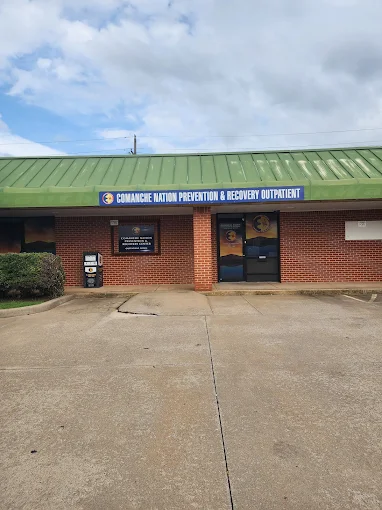
Comanche Nation Prevention and Recovery’s outpatient office provides substance use treatment and recovery support in Lawton, Oklahoma. Run by the Comanche Nation, it serves the local tribal community with counseling, education classes, and case management that people can use while living at home. The office is also the base for the program’s youth and community prevention work.
Rehab Settings
- Outpatient
Services Offered
- Drug Prevention and Education
- Faith-Based
- Relapse Prevention
- Twelve-Step
Clientele Served
- Native Americans
Trust Factors
- Evidence-Based Approach
- Licensed Staff
- Part of a Federally-Recognized Tribe
807 SW F Avenue, Lawton, OK
Key details about Comanche Nation Prevention and Recovery – Outpatient
What are their business hours?
Monday to Friday - 8am to 5pm

Last verified on: 11 November 2026
The Kiowa Alcohol and Drug Abuse Program (KADAP) is the Kiowa Tribe’s outpatient substance use treatment program in Anadarko, Oklahoma. It serves members of the Kiowa Tribe and other federally recognized tribes who live within its 10-county service area. The program’s aim is to combine evidence-based and culturally grounded practices to improve health and wellness for the people it serves.
Rehab Settings
- Outpatient
Services Offered
- Co-Occurring Disorders
- Drug Prevention and Education
- Substance Abuse Counseling
Clientele Served
- Native Americans
Trust Factors
- Evidence-Based Approach
- Licensed Staff
- Part of a Federally-Recognized Tribe
208 Hardee Street West, Anadarko, OK
Key details about Kiowa Alcohol & Drug Abuse Program (KADAP)
What are their business hours?
Monday to Friday - 8am to 4:30pm

Last verified on: 11 November 2026
The Iowa Tribe of Oklahoma provides behavioral health and substance use services through its Perkins Family Clinic in Perkins, Oklahoma. The clinic is part of the Tribal Health Department and serves Native Americans as well as non-Native residents of the surrounding community. Substance use support is offered alongside the clinic’s primary medical care, combining counseling with traditional Native recovery teachings.
Rehab Settings
- Outpatient
Services Offered
- Assessment
- Drug Prevention and Education
- Relapse Prevention
- Substance Abuse Counseling
Clientele Served
- Adolescents
- Adults
- Native Americans
Trust Factors
- Evidence-Based Approach
- Licensed Staff
- Part of a Federally-Recognized Tribe
509 East Highway 33, Perkins, OK
Top Rehab Locations


Last verified on: 10 November 2026
Osage Nation Counseling Center is an outpatient substance use treatment provider in Pawhuska, Oklahoma, operating under the Osage Nation Health System. The center serves both Osage and non-Osage residents of Osage County, regardless of ethnicity, gender, age, or religion. It is accredited by CARF and certified by the Oklahoma Department of Mental Health and Substance Abuse Services.
Rehab Settings
- Outpatient
Services Offered
- Assessment
- Co-Occurring Disorders
- Drug Prevention and Education
- Holistic
- Substance Abuse Counseling
Payment Options
- Low-Cost Options
- Medicaid
- Self Payment
- SoonerCare
Clientele Served
- Adolescents
- Adults
- Native Americans
- Services for Criminal Justice Clients
473 Elks Ldg Road, Pawhuska, OK
Key details about Osage Nation Counseling Center
How much does Osage Nation Counseling Center cost?
Alcohol and Drug Assessments: $135
Individual Counseling: $45
Group Counseling: $20
In certain cases, free of charge for Osage members
Does Osage Nation Counseling Center have a detox on-site?
No, but can help with referral to detox
What professional/medical staff work at Osage Nation Counseling Center?
Stacy Lookout, LPC | Director
Why Families Trust DRS
Independent Resource
100% independent with no treatment provider affiliations, we receive no compensation from providers to be included in our directory
Hands-On Experience
A combined 20+ years of hands-on experience getting people into and through treatment
Trusted by Millions
More than 15 million people trust DRS as a recovery resource
Expertise Backed by Research
Treatment listings backed by thousands of hours of research and a clear vetting process to ensure they are accurate, comprehensive, and meet our ethical standards
Education for Long-Term Recovery
We use our expertise to educate people with in-depth articles and our SUPE school programs, addressing the drug problem from all angles
Family-Owned Commitment
As a family-owned and operated organization, we bring personal dedication and long-term commitment to helping families recover
Frequently Asked Questions
Standard rehab was largely built without Native American communities in mind, and that gap shows up in outcomes. Addiction treatment for Native Americans works best when it goes beyond the clinical foundation of detox, counseling, and relapse prevention to address the full picture, and for AI/AN communities, that picture includes historical trauma. The intergenerational impact of forced displacement, boarding schools, and cultural erasure plays a documented role in substance use rates, and programs that treat it clinically rather than just acknowledging it produce meaningfully better results. Culturally grounded treatment integrates practices like talking circles, elder participation, and traditional ceremonies alongside evidence-based care, not as extras, but as core clinical tools that drive engagement and recovery. A program that recognizes both the medical and cultural dimensions of addiction isn't a luxury; it's what makes treatment actually work.
Rehabs in Oklahoma by Insurance Providers

Professional Perspective: Native American Treatment
For Native Americans and Alaska Natives seeking addiction treatment, finding the right program often means more than finding one with an open bed. It means finding one that understands where you’re coming from: the history, the culture, the community ties that shape who you are and what recovery needs to look like for you. That distinction matters, and it’s worth knowing before you start making calls.
Many Native Americans report that standard treatment programs haven’t worked for them, not because recovery is out of reach, but because those programs weren’t built with their experience in mind. Programs that integrate cultural identity, tribal traditions, and an understanding of historical trauma tend to produce better outcomes and feel like a more honest path forward. Knowing this can help you ask better questions when you’re evaluating your options.
“We think of addiction as a brain disease, and that is a great way to reduce stigma and help people get the treatment they need. But putting the brain at the center of everything is a narrow way of thinking. We need a more holistic view that goes beyond a person’s biology. We must integrate culture, societal factors, and even spirituality, when appropriate, into mainstream medical institutions and education.”

What This Means
For Native Americans and their families, this research points to something that many communities have said for years: healing has to account for the whole person, including cultural identity, community belonging, and the weight of historical loss. A treatment program that addresses only the physical or neurological dimensions of addiction may miss the factors that matter most. When evaluating treatment options, it’s worth seeking out programs that understand this and that make space for cultural identity and community as genuine parts of the recovery process.